HP Officejet 6500 e710n-z on Arch Linux
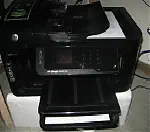
A road story on how to use my HP Officejet 6500 E710n-z printer on Arch Linux without dispensing the duplex unit and the feed scanner.
A road story on how to use my HP Officejet 6500 E710n-z printer on Arch Linux without dispensing the duplex unit and the feed scanner.
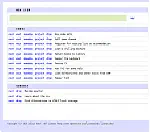
Entering a TODO item into a task manager should be as easy as typing a few words and hitting enter. Moving your TODO item to another list should be exactly one mouse-click away. All lists should be shown at once. The experimental task manager “dropandforget” does just that.
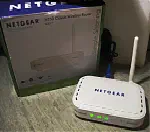
Surprisingly much for the price of 299 SEK: while the range is rather limited, the router features a separate guest network, an intuitive and comparably well-designed user interface for router management, okayish help information, humble packaging, factory defaults easy to find, a short Ethernet cable, and two years guarantee. Good for private use. Quality needs to be appreciated!
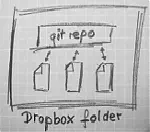
Suppose, two people are working together on a set of files. How to find a version control solution that is accessible for everyone (such as Dropbox) and powerful enough for sharing code (such as git)?
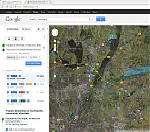
Finally! Now it is possible in Munich to look up directions and connections with public transport on Google Maps (bus connections are still missing!). According to Süddeutsche Zeitung, this took MVG (the local company responsible for operating public transport) a whole man year to finish the interface to Google Maps.
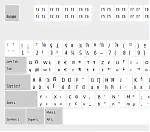
German keyboards come with ÄÖÜ. But they lack the character Å, which is frequently used in Scandinavian languages. Here is a quick-and-dirty fix to customize the xkb map for X11 on Arch Linux.
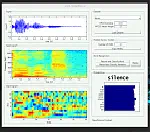
Pattern recognition (EN2202) at KTH Stockholm turned out to be a very good course, concerning lecture, exercises, and the accompanying project work. Together with a fellow student, we created a rudimentary recognizer for spoken words. It is far from production quality, of course. While a good part of the coding has been prepared for the students, the task left enough freedom to play around with hidden markov models in the context of word recognition.
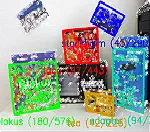
How can we recognize textured objects under the assumption of planarity in images? OpenCV provides extensive support for this task, and helps with local feature extraction, fast approximative matching, and robust model fitting. This article describes a minimalistic detector based solely on OpenCV for all vision subtasks, and also offers pictures, videos, and the source code.
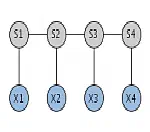
Given a hidden Markov model, we can use the Viterbi algorithm in order to compute the most likely sequence of latent states that produced a certain sequence of observations. Neat: the algorithm is sort of breadth-first search for a maximum in a certain perfect N-ary search tree.
Time was ripe for me to migrate my Arch Linux installation from SysV to systemd. The transition was simple enough and turned out to be smooth in my case. There were not any troubles to be resolved. Furthermore, systemd made a very good first impression.
Looking for a light-weight, space-efficient backup solution for your data on local machines and remote servers? Give rsnapshot a try: relying on existing toolchains, opting for convention over configuration, and simple customization for slightly trickier backup tasks.
Wonder about the depths of C++? Wonder why the code you wrote yesterday no longer works in the morning? Olve Maudal stated on TNG Big Techday 5 in Munich that you ought to look under the hood when you want to understand more about C++. His key statements were: C++ is fast and powerful. Yet, a shark is always lurking in your back, so have an appropriate model in mind. I enjoyed the talk, for more about this, see Olve Maudal’s blog and the freely available slides on the topic.
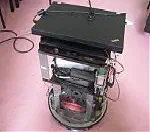
How can we let a robot create a map of an unknown indoor environment using three cameras that simultaneously provide depth information and color images? We investigated this question in a four-week practical course at our university. This article sheds some light on the challenges involved.
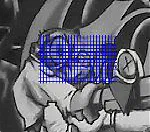
Tracking an object over a sequence of 2D images is a challenging task. One approach uses a linear mapping between observed intensity differences and target motion; this is presented in the paper Hyperplane Approximation for Template Matching by F, Jurie and M. Dhome. Here are some results from an implementation in Matlab by a fellow student and me.
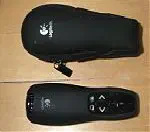
Your wireless presenter is not working for prezi.com in full-screen mode? Here is how you might be able to fix the issue on X-based Linux desktops by temporarily remapping the “Page Up” and “Page Down” buttons of your keyboard.
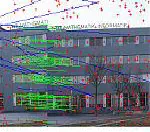
A set of images that have some common overlapping regions can be stichted together to form a panorama picture. Some recent camera models can even compute the panorama picture internally and do not require post-processing on the computer. While this is a problem that has already been solved (for example, there is AutoStitch, here are some hints on classic DIY-panorama-stitching using Matlab, SIFT, DLT and RANSAC.
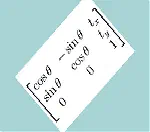
A well-known result from linear algebra is that one can use a matrix to represent any linear mapping between two vector spaces. While rotation is a linear mapping, translation unfortunately is not. But, wait… by adding another dimension to the vector space, and by interpreting the vector coordinates correctly, we are able to perform rotation and translation with a single matrix multiplication! This article describes how to restore a fragmented image with the help of homogeneous coordinates.
Motion blur usually occurs in an image, when the camera was moved with respect to the subject. Motion blur has an interesting effect on the Fourier-transformed image, as pointed out by D. Burschka at University of Technology, Munich. Here is an example how the Fourier-transformed images of toy images look like that have been subject to motion blur.
When using Gnome 3, one can access the dashboard by moving the cursor to the top-left corner of the screen. As it turns out, I always kept accidentally moving the cursor to this “hot corner”, thereby opening the dashboard involuntarily. Here is a small hack that disables this hot-corner effect. You are still able to show the dashboard by activating the “super” key.
Encrypting your hard drive is generally a good idea. Yet, the encryption renders dual-booting a little more difficult. Here I briefly sketch how I installed Ubuntu in parallel to an existing Arch installation on a LUKS-encrypted drive.
Being suprised by a low-flying unidentified objects? Maybe it was just a remote-controlled airplane by Team Black Sheep, who were giving a talk at TNG Big Techday in Munich on 2011-05-27.
Having a poisson-distributed random variable X, how can we efficiently generate samples (or say realizations) of that random variable? This article shows how Knuth’s technique can be derived and it also indicates that the Ratio-of-Uniforms method is quite efficient.
Who has the luxury of working on a green field project where you can write everything from scratch, and thus feel in control about your code? I usually don’t. There are several good reasons that force programmers to develop their skills in reading code they have not written by themselves. You might want to add a feature (extending existing code), fix a bug (maintaining existing code), look for inspiration (learning from existing code) or integrate functions into another project (reusing existing code). All of these goals require you to read code.
Unsharp masking is an image enhancement technique that sharpens an image and highlights fine detail and put more weight on edges. By subtracting a blurred version of the original image, one obtains an unsharp mask that in turn can be added to the original image. An easy-to-digest explanation can be found in the “GIMP help pages”:file:///usr/share/gimp/2.0/help/en/plug-in-unsharp-mask.html. Here is an example of a picture before and after unsharp masking:
This article shows the derivation of an algorithm for resizing images in Matlab, using nearest-neighbor interpolation. Scaling an image is mathematically just multiplying image coordinates by a scaling factor. Surprisingly, when dealing with digital images, the scaling process becomes a little bit more complex.